
Oman’s construction boom and rapid urbanization have transformed the sanitary ware industry into one of the most dynamic sectors in the Sultanate’s economy. Whether you’re a contractor managing multi-million Rial villa developments in Muscat, an interior designer seeking premium bathroom fixtures for luxury hotels, or a homeowner planning a bathroom renovation in Sohar, choosing the right sanitary ware supplier can make the difference between project success and costly disappointments. The market has evolved far beyond basic functionality—today’s consumers demand eco-friendly solutions, cutting-edge technology, and designs that reflect both global trends and local preferences.
The sanitary ware supplier landscape in Oman has matured significantly over the past decade, with established players like Al Fanar Group leading the market through exclusive partnerships with world-renowned brands like Grohe. These suppliers don’t merely stock products; they provide comprehensive solutions including professional consultation, technical support, genuine warranties, and after-sales services that protect your investment for decades. Understanding which suppliers deliver authentic products, maintain consistent inventory, and offer expertise suited to Oman’s unique climate challenges separates informed decisions from expensive mistakes.
This comprehensive guide draws on insights from Oman’s construction industry leaders, interior designers, and thousands of completed projects across Muscat, Sohar, Nizwa, and Salalah. We’ll explore the sanitary ware supplier’s current state, identify top suppliers and brands performing exceptionally in Oman’s demanding conditions, examine emerging trends reshaping bathroom design, and provide actionable guidance for selecting suppliers who deliver quality, reliability, and value. Whether you’re sourcing for commercial projects or residential applications, this guide equips you with knowledge to make confident supplier decisions.
Understanding Oman’s Sanitary Ware Market Landscape
Market Growth and Infrastructure Development
Oman’s sanitary ware market has experienced remarkable growth driven by the government’s Vision 2040 infrastructure initiatives and sustained private sector investment in residential and commercial development. The construction boom spanning Muscat’s expanding suburbs, Duqm’s Special Economic Zone, and Salalah’s tourism projects creates unprecedented demand for quality bathroom fixtures. Market analysts project continued double-digit growth through 2030 as mega-projects materialize and middle-class housing development accelerates.
This expansion has attracted both international manufacturers and regional suppliers to establish robust distribution networks throughout the Sultanate. The market has evolved from importing basic fixtures to offering comprehensive solutions spanning ultra-luxury to value-conscious segments. Suppliers now maintain extensive showrooms where architects and homeowners experience products firsthand, significantly improving the purchasing process compared to catalog-only approaches that dominated just a decade ago.
Infrastructure investment extends beyond new construction to renovation and upgrading of existing properties. Hotels refresh bathrooms to maintain competitiveness, government buildings undergo modernization, and homeowners increasingly invest in bathroom upgrades that enhance comfort and property value. This renovation wave creates steady demand complementing new construction, providing suppliers with diversified revenue streams and encouraging investment in customer service infrastructure.
Consumer Behavior Shifts and Expectations
Today’s Omani consumers approach sanitary ware purchases with sophistication reflecting increased exposure to global design trends and heightened environmental consciousness. Social media, international travel, and design publications have elevated expectations beyond purely functional considerations. Bathrooms have evolved into personal sanctuaries where design aesthetics, wellness features, and technological innovation converge—driving demand for premium products that previous generations would have considered unnecessary luxuries.
The shift toward sustainability represents perhaps the most significant behavioral change. Water scarcity concerns and rising utility costs have made water-saving fixtures not merely environmentally responsible choices but economically rational ones. Consumers actively seek dual-flush toilets, low-flow faucets, and efficient shower systems that reduce consumption without sacrificing performance. Suppliers responding to this demand with genuine eco-friendly products rather than greenwashing marketing gain competitive advantages and customer loyalty.
Quality consciousness has intensified as consumers recognize that cheap fixtures create expensive long-term problems. The painful lessons of corroded faucets, cracked toilets, and leaking shower systems have educated the market about false economy in bathroom fixtures. Discerning buyers now prioritize reputable suppliers offering authentic branded products with proper warranties over discount outlets selling questionable quality items. This maturation benefits established suppliers like Al Fanar Group who built reputations on reliability rather than racing to the bottom on price.
Leading Sanitary Ware Suppliers in Oman
Al Fanar Group: Oman’s Exclusive Grohe Dealer
Al Fanar Group stands as Oman’s premier sanitary ware supplier through its exclusive partnership with Grohe, the German engineering icon representing the pinnacle of bathroom fixture quality. Established in 2017 with showrooms in Muscat’s 18 November Street and City Centre, plus locations in Sohar and Nizwa, Al Fanar has rapidly become the trusted source for premium bathroom solutions across the Sultanate. The company’s focus on authentic products, professional service, and comprehensive warranties sets industry standards other suppliers struggle to match.
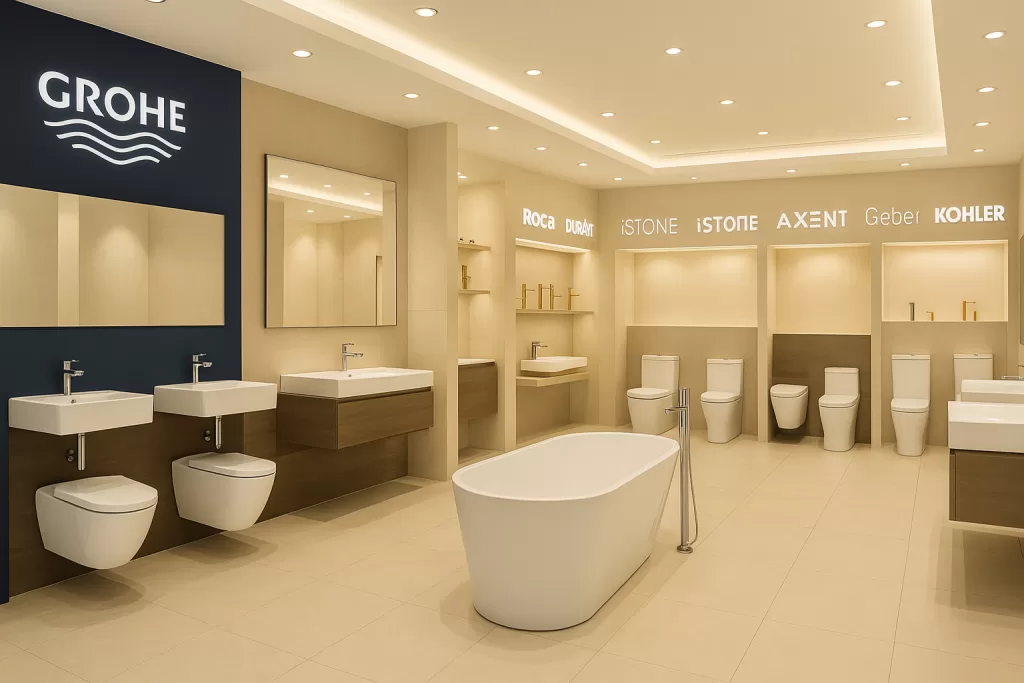
What distinguishes Al Fanar beyond product quality is their commitment to complete customer solutions. Factory-trained technicians ensure proper installation adhering to manufacturer specifications—critical for warranty validity and optimal performance in Oman’s challenging climate. The company maintains extensive spare parts inventory, eliminating the weeks-long waits common when ordering components internationally. This infrastructure investment demonstrates long-term commitment to customer satisfaction extending far beyond initial sales.
Al Fanar’s product portfolio extends beyond Grohe to include carefully curated brands like Lixil (Japanese smart toilet technology), Orka (Turkish bathroom furniture), and Venice (Italian luxury bathtubs). The company also exclusively distributes Kayan Marbles premium surfaces and Centro furniture from Greece, positioning them as comprehensive home solution providers rather than single-category specialists. This breadth allows architects and contractors to consolidate purchasing through one reliable supplier, simplifying project management and ensuring aesthetic coordination.
Established Regional Suppliers
Several regional suppliers have built strong presences in Oman through decades of operation and relationships with multiple international brands. These suppliers typically offer broader brand selections than exclusive dealers, providing options across various price points and design aesthetics. Their experience navigating Oman’s import regulations, understanding local preferences, and maintaining supply chain reliability makes them valuable partners particularly for large commercial projects requiring diverse specifications.
These established players often maintain relationships with contractors and developers built over many years and numerous projects. Their understanding of project timelines, payment terms favorable to construction industry cash flows, and ability to handle large orders distinguishes them from retail-focused suppliers. For commercial developers and contractors, these suppliers’ operational capabilities often outweigh the cachet of exclusive brand partnerships when project success depends on reliable supply at scale.
However, buyers must carefully verify product authenticity when purchasing from multi-brand suppliers. The gray market in counterfeit fixtures poses real risks, with sophisticated fakes bearing brand names but lacking genuine quality. Reputable suppliers provide documentation proving authentic sourcing directly from manufacturers. When prices seem too good to be true compared to exclusive dealers, skepticism is warranted—genuine branded products maintain relatively consistent pricing reflecting their actual value.
Emerging Online and Hybrid Suppliers
Digital transformation is reshaping sanitary ware distribution with online suppliers and hybrid physical-digital models gaining traction. These suppliers leverage e-commerce platforms to reach customers beyond traditional showroom locations, offering convenience particularly appealing to busy professionals and those in smaller cities lacking comprehensive showroom access. The ability to browse extensive catalogs, compare specifications, and read reviews at any hour provides value traditional models cannot match.
Online suppliers face challenges in bathroom fixtures where physical experience significantly influences purchasing decisions. Faucet weight and finish quality, shower spray patterns, toilet seating comfort—these tactile elements matter immensely but cannot be conveyed through screen images alone. Successful online suppliers address this through generous return policies, detailed video content, and partnerships with physical showrooms where customers can experience products before ordering online for potentially better pricing.
The hybrid model combining showroom experience with online transaction convenience represents the likely future. Customers visit physical locations to experience products, receive professional consultation, and finalize selections—then complete purchases online with products delivered directly to construction sites or homes. This approach optimizes both the tactile evaluation benefits of physical retail and the operational efficiencies of e-commerce. Suppliers investing in these integrated experiences position themselves advantageously as digital-native consumers comprise growing market shares.
Premium Brands Shaping Oman’s Market
Grohe: German Engineering Excellence
Grohe’s dominance in Oman’s premium sanitary ware segment reflects the brand’s uncompromising commitment to quality, innovation, and performance that resonates with discerning Omani consumers. Founded in 1936, Grohe has spent nearly 90 years perfecting water technology through rigorous German engineering discipline. Every product undergoes extensive testing simulating decades of real-world use before market introduction—ensuring the reliability that has made Grohe synonymous with quality globally.
Grohe’s signature technologies deliver tangible benefits appreciated in Oman’s demanding climate. SilkMove cartridge technology provides effortlessly smooth faucet operation maintaining precision throughout the product’s lifespan. StarLight chrome finish resists scratching, tarnishing, and corrosion far better than standard plating—critical in humid coastal environments. SpeedClean anti-limescale nozzles simplify maintenance in hard water areas through flexible silicone that releases mineral deposits with simple finger wiping. These innovations aren’t marketing hype; they solve real problems Omani users face daily.
The brand’s water-saving technologies align perfectly with Oman’s sustainability priorities. EcoJoy aerators reduce consumption up to 50% while maintaining satisfying water flow through air-mixing technology. In a country where water resources face increasing pressure, these efficiencies deliver environmental benefits and reduced utility costs without compromising user experience. Grohe proves sustainability and luxury aren’t mutually exclusive—a message resonating strongly with environmentally conscious Omani consumers.
Roca and Ideal Standard: European Reliability
Spanish manufacturer Roca and British brand Ideal Standard represent European bathroom fixture traditions spanning over a century each. Both brands offer comprehensive product ranges from budget-friendly essential lines to premium designer collections, providing options for projects across all market segments. Their longstanding presence in Middle Eastern markets means products specifically designed for regional conditions rather than merely exporting European-focused designs.
Roca’s strength lies in ceramic expertise producing toilets, bidets, and basins of exceptional quality at competitive price points. The company’s manufacturing scale enables competitive pricing without compromising quality—making Roca popular for mid-range commercial and residential projects seeking European quality at accessible costs. Their design range spans traditional to contemporary, accommodating diverse aesthetic preferences common in Oman’s multicultural population.
Ideal Standard similarly offers reliability and range, with particular strength in complete bathroom solutions coordinating all fixtures in unified design languages. For hotels and residential developments seeking aesthetic consistency, Ideal Standard’s comprehensive collections simplify specification while ensuring visual harmony. Both brands maintain adequate distribution in Oman through multiple suppliers, though buyers should verify authentic sourcing and warranty coverage when purchasing.
Japanese and Korean Innovation Leaders
Asian manufacturers led by Lixil (Japan) and Korean brands are reshaping bathroom technology through smart toilet innovations and advanced electronics integration. Lixil’s smart toilets featuring integrated bidets, heated seats, automatic lids, air drying, and deodorizers transform bathroom experiences in ways European manufacturers haven’t matched. These technologies, standard in Japanese homes, are gaining traction in Oman among consumers seeking ultimate comfort and hygiene.
The smart toilet category represents the bathroom industry’s most significant innovation since indoor plumbing itself. The superior hygiene of water washing compared to paper, combined with conveniences like automatic lid opening, night lights, and personalized settings, creates genuinely life-changing experiences that justify premium pricing. Once users experience quality smart toilets, returning to traditional fixtures feels primitive—explaining rapid adoption despite significant costs.
Korean manufacturers bring competitive pricing to smart features, offering value-conscious alternatives to Japanese premium brands. While generally not matching Lixil’s refinement, Korean products deliver core smart toilet functionalities at notably lower prices—expanding access to these technologies beyond luxury market segments. For developers seeking differentiation without maximum budgets, Korean smart toilets provide compelling middle-ground options.
Emerging Trends Transforming Oman’s Sanitary Ware Industry
Sustainability and Water Conservation Focus
Environmental sustainability has evolved from niche concern to mainstream priority driving purchasing decisions across all market segments. Oman’s water scarcity challenges make conservation not merely environmentally responsible but economically essential. The government’s increasing emphasis on green building standards and LEED certification for commercial projects creates regulatory pressures complementing consumer demand for eco-friendly fixtures.
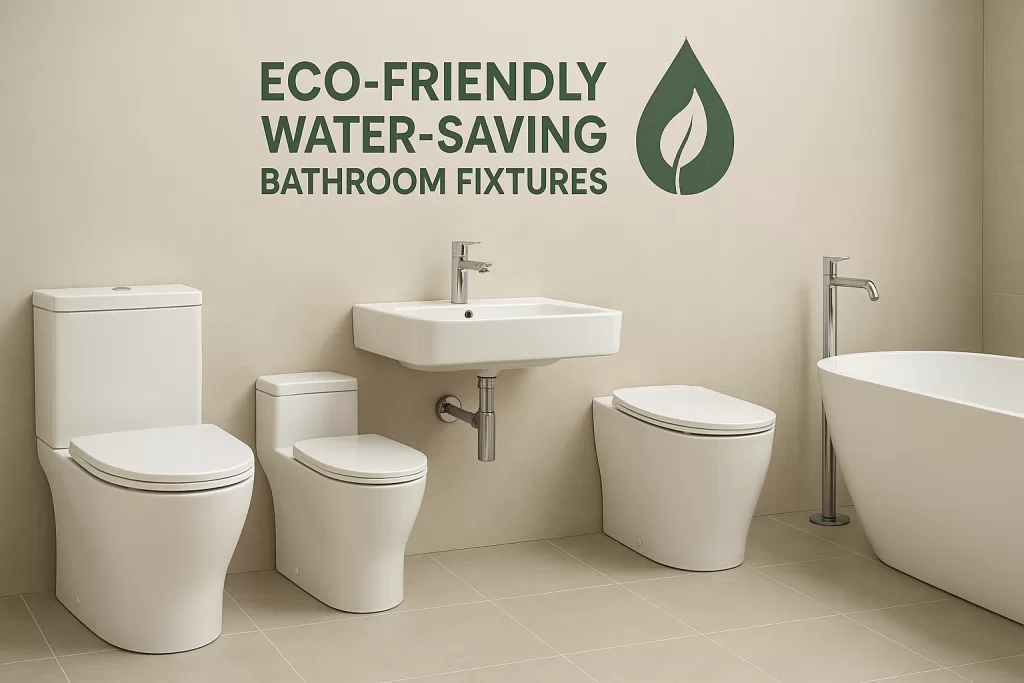
Dual-flush toilet systems represent the most widely adopted water-saving technology, allowing users to select appropriate water volumes for different waste types. Typical dual-flush toilets use 3 liters for liquid waste versus 6 liters for solid waste, compared to traditional single-flush models consuming 9-12 liters per flush. For average households, this technology reduces water consumption by 30-40% annually—delivering meaningful utility bill savings alongside environmental benefits.
Low-flow faucets and showerheads achieve similar conservation through aerator technologies mixing air with water, maintaining perceived pressure and coverage while using substantially less water. Modern low-flow fixtures deliver satisfying experiences indistinguishable from wasteful alternatives—proving that conservation need not compromise comfort. Suppliers prioritizing these technologies and educating customers on long-term savings gain competitive advantages as environmental consciousness intensifies.
Smart Bathroom Technology Integration
Bathroom automation and smart technology adoption is accelerating as consumers experience benefits of connected home devices in other areas. Touchless faucets activated by motion sensors improve hygiene by eliminating surface contact where bacteria accumulates. Digital shower controls allow precise temperature and flow programming, saving preferred settings for different family members. Voice-activated mirrors, automated toilet lids, and Bluetooth speakers integrate bathrooms into smart home ecosystems.
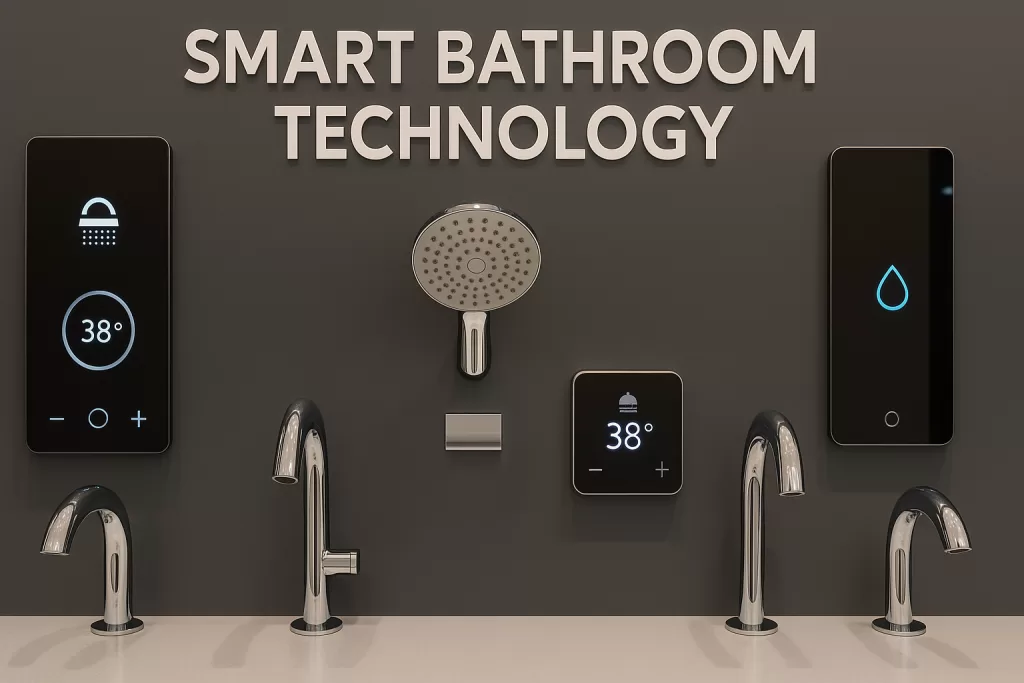
The COVID-19 pandemic accelerated touchless technology adoption as heightened hygiene awareness made surface contact in shared spaces concerning. Commercial properties—offices, hotels, restaurants—rapidly upgraded to touchless faucets, soap dispensers, and paper towel systems. This commercial adoption normalized the technology, reducing consumer resistance to installing similar systems in homes. The convenience factor drives continued adoption even as pandemic concerns recede.
Smart technology integration faces challenges including higher costs, installation complexity requiring electrical work beyond basic plumbing, and potential reliability issues as electronics fail more frequently than simple mechanical components. Suppliers must provide adequate technical support and clear warranty coverage for electronic components. As technology matures and costs decline, smart bathrooms will transition from luxury novelties to mainstream expectations—suppliers positioning accordingly will capture growing market share.
Minimalist Design and Natural Materials
Contemporary bathroom design in Oman increasingly embraces minimalist aesthetics emphasizing clean lines, neutral colors, and uncluttered spaces creating serene, spa-like atmospheres. This shift contrasts with the ornate, heavily decorated bathrooms popular in previous decades. Modern consumers seek bathrooms as relaxation sanctuaries rather than purely functional spaces—driving demand for products supporting these design visions.
Natural materials like stone, wood textures, and organic shapes bring warmth to minimalist spaces that might otherwise feel cold and sterile. Bathroom vanities featuring wood grains, stone vessel sinks, and earth-toned tiles balance minimalist simplicity with organic comfort. Suppliers expanding offerings beyond traditional white ceramics and chrome fixtures to include textured finishes, matte blacks, brushed golds, and natural stone options meet this evolving aesthetic demand.
Large-format tiles with minimal grout lines contribute to minimalist aesthetics while offering practical benefits. Fewer grout lines mean easier cleaning and reduced maintenance—particularly valuable in Oman’s climate where moisture and dust accelerate deterioration. Suppliers connecting customers with tile manufacturers offering contemporary large-format options provide complete solution capabilities that simplify project execution and ensure aesthetic coordination.
Personalization and Customization
Mass-produced standard fixtures are giving way to customizable solutions allowing customers to create unique bathroom expressions reflecting personal style. Manufacturers now offer modular systems where customers select basin styles, vanity finishes, faucet designs, and hardware separately—creating personalized combinations rather than accepting predetermined packages. This flexibility appeals to consumers seeking spaces expressing individuality rather than generic hotel-bathroom aesthetics.
Custom sizing addresses Oman’s diverse housing stock ranging from compact apartments to sprawling villas. Standard-sized vanities often don’t optimize available space, leaving awkward gaps or overwhelming small bathrooms. Suppliers offering custom sizing services maximize space utilization while maintaining design quality. This value-added capability differentiates full-service suppliers from basic product vendors.
Personalization extends to smart features where users program preferred temperatures, spray patterns, lighting levels, and music selections. These programmable preferences transform bathrooms into truly personal spaces accommodating different family members’ comfort preferences. Suppliers emphasizing customization capabilities and guiding customers through decision processes position themselves as partners in creating dream bathrooms rather than merely product vendors.
Technology and Innovation in Modern Sanitary Ware
Touchless and Sensor-Based Systems
Touchless technology has evolved from commercial restroom novelty to residential standard as consumers appreciate hygiene benefits and modern convenience. Motion-sensor faucets activate water flow when hands approach, eliminating bacterial transfer from contaminated surfaces while reducing water waste from faucets left running. Automatic soap dispensers and towel holders complete touchless bathroom experiences reducing germ transmission throughout facilities.
The technology’s reliability has improved dramatically with modern sensors accurately detecting presence while avoiding false activations that plagued early systems. Battery life has extended to years rather than months, reducing maintenance requirements. Some systems harvest energy from water flow, eliminating batteries entirely. These improvements address early adopters’ frustrations, removing barriers to broader acceptance.
Installation remains more complex and costly than traditional fixtures, requiring electrical connections or battery access. Suppliers must provide clear installation guidance and ensure electricians understand specific requirements. Technical support for troubleshooting sensor calibration issues proves crucial for customer satisfaction. As installation expertise becomes more widespread and costs decline, touchless systems will transition from premium options to expected standards in modern bathrooms.
Water Filtration and Treatment Integration
Integrated water treatment systems addressing Oman’s hard water challenges are gaining popularity as consumers recognize mineral buildup’s detrimental effects on fixtures and skin. Whole-home water softeners remove minerals preventing limescale accumulation that clogs aerators, clouds glass shower doors, and damages hair and skin. Point-of-use filters at specific fixtures provide targeted treatment for drinking water or delicate fixtures.
The shower filter market specifically targets skin and hair concerns, removing chlorine and minerals that cause dryness and damage. These relatively affordable filters attach to existing shower arms, requiring no plumbing modifications. Consumer awareness is growing about shower water quality’s impact on health and appearance, driving demand for filtration solutions. Suppliers offering these ancillary products expand value propositions beyond basic fixtures.
Water treatment represents opportunity for suppliers to provide ongoing consumable sales through replacement filter cartridges. This recurring revenue model benefits both suppliers and customers—suppliers gain predictable income streams while customers receive reminders ensuring timely filter replacement maintaining water quality. Subscription models automating filter delivery at appropriate intervals simplify maintenance, increasing customer satisfaction and lifetime value.
Antibacterial and Self-Cleaning Surfaces
Advanced ceramic glazes incorporating antibacterial agents actively eliminate bacteria on toilet and basin surfaces between cleanings. These technologies address hygiene concerns while reducing cleaning frequency and harsh chemical usage. Silver ion-infused glazes demonstrate proven effectiveness killing 99.9% of bacteria within hours of contact—providing measurable health benefits particularly for families with young children or immunocompromised members.
Self-cleaning toilet technologies using UV light, electrolyzed water, or special coatings minimize manual cleaning requirements. Japanese manufacturers lead this category with toilets featuring automatic cleaning cycles after each use. While expensive, these systems appeal to consumers prioritizing convenience and hygiene above all. As technology costs decline and awareness grows, self-cleaning fixtures will expand beyond luxury niches.
Easy-clean surfaces with special coatings preventing dirt and mineral adhesion simplify maintenance even without active cleaning mechanisms. These nanotechnology coatings create ultra-smooth surfaces where contaminants can’t grip, allowing simple water rinsing to restore cleanliness. Grohe’s SpeedClean technology exemplifies this approach—practical innovation solving real problems without unnecessary complexity or electronic components that might fail.
Selecting the Right Sanitary Ware Supplier in Oman
Essential Supplier Evaluation Criteria
Choosing sanitary ware suppliers requires evaluating multiple factors beyond product catalogs and pricing. Reputation built through years of successful projects and satisfied customers provides the strongest indicator of reliability. Research suppliers through online reviews, industry references, and conversations with contractors and interior designers who work with them regularly. Established suppliers with positive reputations rarely achieve success through anything other than consistent performance.
Product authenticity verification is non-negotiable given counterfeit fixture prevalence. Reputable suppliers provide documentation proving direct relationships with manufacturers. They display authentic brand signage, maintain professional showrooms with proper product displays, and offer manufacturer warranties—not generic “store warranties” that prove worthless when issues arise. When prices significantly undercut authorized dealers, skepticism is appropriate as genuine branded products maintain relatively consistent pricing.
After-sales service and technical support separate excellent suppliers from adequate ones. Issues inevitably arise—wrong specifications delivered, installation challenges, warranty claims. How suppliers handle these situations determines customer satisfaction. Test responsiveness by asking detailed technical questions before committing to purchases. Suppliers providing knowledgeable, timely assistance during pre-purchase stages will likely deliver similar service afterward. Those difficult to reach or providing vague answers foreshadow post-purchase frustrations.
Importance of Comprehensive Product Range
Suppliers offering complete bathroom solution capabilities simplify project execution by consolidating purchasing through single sources. Rather than sourcing toilets from one supplier, faucets from another, tiles from a third, and accessories from a fourth, comprehensive suppliers provide everything coordinating aesthetically and logistically. This consolidation reduces coordination complexity, minimizes delivery timing issues, and often yields better pricing through volume purchasing.
Product depth within categories matters as much as category breadth. A supplier might offer “faucets” but stock only basic models lacking the specific finish, style, or features your project requires. Leading suppliers maintain inventory spanning entry-level to ultra-luxury across all categories—ensuring appropriate options regardless of budget constraints or aesthetic requirements. This depth prevents compromises settling for “close enough” when ideal products exist but aren’t accessible.
Display capabilities allowing customers to experience products physically rather than selecting from catalogs significantly improve decision quality. Touching faucet finishes, operating shower controls, sitting on display toilets—these tactile experiences prevent mismatches between expectations and reality. Suppliers investing in comprehensive showrooms demonstrate commitment to customer satisfaction beyond merely moving inventory. Virtual or catalog-only selection increases return and replacement rates creating frustrations for all parties.
Pricing, Warranties, and Service Agreements
Transparent pricing builds trust more effectively than opaque “call for quote” approaches suggesting negotiable pricing varying by customer. While some flexibility for large projects makes sense, reputable suppliers publish base pricing allowing informed preliminary budgeting. Hidden fees for delivery, installation supervision, or technical support that emerge after commitment breed resentment. Clarify complete cost structures during initial discussions preventing surprises derailing projects.
Comprehensive warranties covering both manufacturing defects and installation workmanship protect investments in premium fixtures expected to last decades. Manufacturer warranties typically cover 5+ years for quality brands like Grohe, while installation warranties from suppliers using certified technicians add another protection layer. Understand precisely what warranties cover, exclusion conditions, and claim processes before purchasing. Suppliers making warranty claims difficult or denying legitimate claims should be avoided regardless of competitive pricing.
Service agreements for commercial installations ensure ongoing maintenance and rapid response when issues arise. Hotels, offices, and retail establishments cannot afford extended downtime when bathroom fixtures fail. Suppliers offering service contracts with guaranteed response times and stocked spare parts deliver value justifying premium pricing. These agreements often include preventive maintenance catching minor issues before they become major problems, extending fixture life and preventing emergency repair situations.
Commercial vs. Residential Supplier Considerations
Specialized Commercial Requirements
Commercial projects present distinct challenges requiring suppliers with specific capabilities and experience. Volume requirements often involve hundreds or thousands of fixtures, necessitating suppliers with adequate inventory or reliable manufacturer relationships ensuring timely delivery of large orders. Small residential-focused suppliers lacking commercial experience struggle meeting large project demands within construction timeline constraints.
Specification flexibility accommodates commercial projects’ unique requirements differing from standard residential applications. Hotels might need specific faucet flow rates optimizing water efficiency across hundreds of rooms while maintaining guest satisfaction. Office buildings require ADA-compliant fixtures meeting accessibility regulations. Suppliers understanding these specialized requirements and stocking appropriate products simplify specification processes preventing expensive custom orders or specification changes mid-project.
Commercial installation support including on-site supervision and coordination with general contractors proves essential for large projects. Residential installation teams lack experience coordinating with multiple trades simultaneously working on commercial sites. Suppliers maintaining commercial installation divisions or partnerships with experienced commercial contractors reduce coordination headaches for developers and ensure proper installation maintaining warranties and performance.
Residential Customer Service Priorities
Residential customers require personalized consultation helping navigate overwhelming product selections and translating design visions into appropriate product choices. Homeowners lack technical knowledge differentiating similar-appearing products with vastly different quality levels and lifespans. Patient, knowledgeable consultants educating customers rather than pushing highest-margin products build trust and loyalty generating referrals.
Flexible payment options accommodate residential cash flows differing from commercial project structures. Homeowners might require installment plans spreading costs over renovation timelines. Credit approval processes should be straightforward without commercial-level financial scrutiny. Suppliers offering convenient payment options remove barriers to purchasing preferred products rather than forcing compromises due to timing constraints.
After-sales support including installation guidance for DIY customers or recommendations for qualified installers proves valuable. Many homeowners attempt installations themselves or hire general handymen rather than specialized plumbers. Suppliers providing detailed installation instructions and technical support help ensure successful outcomes maintaining customer satisfaction. Offering referrals to qualified installers demonstrates commitment to customer success beyond merely selling products.
Frequently Asked Questions
Who are the most reliable sanitary ware suppliers in Oman?
Al Fanar Group leads Oman’s sanitary ware market as the exclusive Grohe dealer, offering premium German-engineered fixtures with comprehensive warranties and professional installation services across Muscat, Sohar, and Nizwa. Their commitment to authentic products, factory-trained technicians, and extensive spare parts inventory sets reliability standards in the industry. Other reputable suppliers include established regional distributors representing brands like Roca and Ideal Standard. When evaluating suppliers, prioritize those with physical showrooms, documented manufacturer relationships, positive customer reviews, and comprehensive after-sales support. Avoid suppliers offering suspiciously low pricing suggesting counterfeit or gray-market products.
What should I look for when choosing a sanitary ware supplier?
Essential factors include product authenticity verification through manufacturer documentation, comprehensive warranties covering both products and installation, extensive product ranges providing complete bathroom solutions, professional showrooms allowing physical product experience, knowledgeable sales consultants offering technical guidance, and reliable after-sales service including spare parts availability. Additionally, evaluate supplier reputation through online reviews and industry references, pricing transparency avoiding hidden fees, and delivery reliability meeting project timelines. For commercial projects, confirm supplier experience with large-scale installations and ability to handle volume requirements within construction schedules.
Are eco-friendly sanitary ware products available in Oman?
Yes, leading Oman suppliers like Al Fanar Group stock extensive eco-friendly options including dual-flush toilets reducing water consumption by 30-40%, low-flow faucets and showerheads using aerator technology to minimize water usage while maintaining performance, and energy-efficient products with sustainable manufacturing certifications. Grohe’s EcoJoy technology exemplifies water-saving innovation delivering up to 50% consumption reduction without compromising user experience. Sustainable products align with Oman’s Vision 2040 environmental priorities while providing long-term utility cost savings. Suppliers can guide selections balancing environmental responsibility with performance requirements and budget constraints. Eco-friendly fixtures increasingly represent mainstream options rather than premium specialty products.
What’s the difference between authorized dealers and general suppliers?
Authorized dealers like Al Fanar Group maintain exclusive partnerships with specific manufacturers, guaranteeing product authenticity, full manufacturer warranties, access to latest collections before general market availability, factory-trained installation and service technicians, and comprehensive spare parts inventory. General suppliers stock multiple brands providing broader selection but may source through distributors rather than directly from manufacturers, potentially affecting pricing, warranty coverage, and product authenticity verification. Authorized dealers typically invest more heavily in brand-specific training, showroom displays, and customer service infrastructure. For premium brands like Grohe, purchasing through authorized dealers ensures genuine products and proper warranty protection unavailable through unauthorized channels.
How can I verify if sanitary ware products are authentic?
Authentic products include manufacturer holograms, serial numbers, and quality packaging absent in counterfeits. Reputable suppliers provide documentation proving direct manufacturer relationships and purchase authentic products only through authorized channels. Examine products for quality indicators—solid brass construction versus lightweight zinc alloys, smooth ceramic glazes without imperfections, and precisely machined components fitting perfectly. Suspiciously low pricing compared to authorized dealers suggests counterfeit or gray-market products. Purchase from established suppliers with physical showrooms displaying proper brand signage and authorized dealer certificates. Manufacturers’ websites typically list authorized dealers—verify supplier credentials before major purchases.
What warranty coverage should quality sanitary ware include?
Premium brands like Grohe typically offer 5-year manufacturer warranties covering manufacturing defects and material failures under normal use conditions. Quality suppliers add installation warranties covering workmanship for 1-2 years when using certified installers. Warranties should clearly specify coverage inclusions and exclusions—typically excluding damage from misuse, improper installation, or failure to maintain products per manufacturer guidelines. Understand claim processes including required documentation and response timelines. Suppliers making warranty claims difficult or denying legitimate claims should be avoided. Extended warranties available on select flagship products provide additional protection for maximum peace of mind. Always purchase from authorized dealers ensuring warranty validity.
Do Oman suppliers offer installation services?
Leading suppliers like Al Fanar Group provide professional installation through factory-trained technicians ensuring proper setup maintaining warranty validity and optimal performance. Installation services typically include site assessment, professional fitting adhering to manufacturer specifications, testing ensuring correct operation, and cleanup leaving bathrooms ready for use. Installation costs vary based on project complexity—simple faucet replacement versus complete bathroom renovation. Many suppliers offer installation as optional service allowing customers choosing independent contractors if preferred. For warranty protection and peace of mind, professional installation through certified technicians is strongly recommended, particularly for premium products and complex systems like thermostatic showers or smart toilets.
What are current sanitary ware pricing trends in Oman?
Pricing varies widely based on brand positioning, product categories, and quality levels. Entry-level fixtures from reputable brands start around 50-80 OMR per piece, mid-range quality products typically range 100-200 OMR, and premium brands like Grohe command 200-500+ OMR reflecting German engineering and materials quality. Smart toilets represent the highest price category from 500-1,500+ OMR depending on features. Pricing has remained relatively stable despite global supply chain challenges, though premium products maintain value better than economy options. Suppliers offering suspiciously low pricing likely sell counterfeit products or lack proper warranty coverage. Invest in quality products from reputable suppliers delivering superior long-term value versus cheap alternatives requiring frequent replacement.
How do I find suppliers for large commercial projects?
Commercial project sourcing requires suppliers with specific capabilities including volume inventory or reliable manufacturer relationships delivering large orders, experience coordinating with general contractors and project timelines, specification flexibility accommodating unique commercial requirements, and installation divisions handling multi-unit properties. Request references from similar completed projects verifying supplier performance. Evaluate financial stability ensuring suppliers can handle large order cash flow requirements. Commercial suppliers should provide dedicated account managers familiar with construction industry processes. Begin supplier discussions early in design phases allowing adequate time for specification, ordering, and delivery coordination. Leading suppliers like Al Fanar Group maintain commercial project divisions with proven track records across hotels, offices, and residential developments.
What after-sales services should suppliers provide?
Comprehensive after-sales service includes technical support answering installation and operation questions, warranty claim assistance processing manufacturer warranties efficiently, spare parts availability for replacement components without international ordering delays, maintenance guidance maximizing fixture lifespan, and repair services addressing issues beyond warranty coverage. Commercial clients benefit from service agreements guaranteeing rapid response times and preventive maintenance. Quality suppliers view customer relationships as long-term partnerships extending far beyond initial sales. Test supplier responsiveness before committing to purchases—those providing excellent pre-sale service typically deliver similar post-sale attention. After-sales service quality often justifies premium pricing through reduced long-term frustration and costs.
Conclusion: Choosing Your Sanitary Ware Partner in Oman
Selecting the right sanitary ware supplier represents one of the most impactful decisions in any construction or renovation project. The supplier you choose determines not only the quality of products installed but also the entire purchasing experience, installation quality, warranty protection, and long-term support ensuring fixtures perform optimally for decades. In Oman’s rapidly evolving market, suppliers like Al Fanar Group set standards through exclusive brand partnerships, professional service infrastructure, and unwavering commitment to customer satisfaction that extends far beyond initial sales.
The trends reshaping Oman’s sanitary ware industry—sustainability focus, smart technology integration, design evolution, and personalization—create both opportunities and challenges for consumers navigating increasingly complex product landscapes. Partnering with knowledgeable suppliers who educate rather than merely sell, guide specifications matching needs to appropriate solutions, and support installations ensuring success transforms potentially overwhelming processes into enjoyable experiences creating bathrooms that enhance daily life.
Ready to partner with Oman’s leading sanitary ware supplier? Visit Al Fanar Group’s showrooms in Muscat (18 November Street & City Centre), Sohar, or Nizwa to explore the Sultanate’s most comprehensive collection of premium bathroom solutions. As Oman’s exclusive Grohe dealer, we offer authentic German-engineered fixtures, professional consultation, expert installation, and comprehensive after-sales support that protects your investment. Discover our complete sanitary ware collection and experience why discerning customers across Oman trust Al Fanar Group for bathroom solutions combining quality, innovation, and lasting value. Contact us today to schedule your personalized consultation and transform your bathroom vision into reality.